

Pediatric Eye Exams at Desert Iris Vision in Gilbert AZ
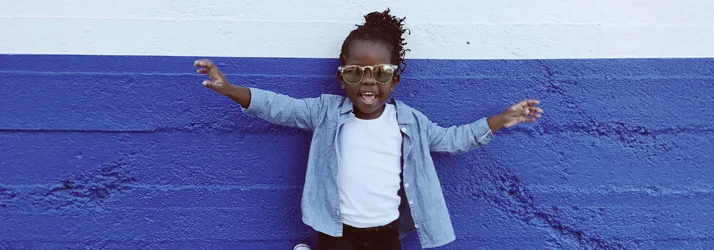
Your child’s eyes change constantly during the formative years. Eye problems at this stage can develop quietly, shaping how they learn, read, and see the world around them. At Desert Iris Vision in Gilbert, AZ, Shadan Zangana brings specialized training in pediatric eye care to exams specially designed to diagnose and treat your child’s vision.
Why Pediatric Eye Exams Differ from Adult Eye Exams
Children cannot always clearly describe how well they see. Many are too young to read letters on the standard eye chart. A pediatric eye exam accounts for this by relying on picture-based testing (LEA charts), behavioral observation, and evaluation techniques suited to the child’s age. The one-size-fits-all approach that works well for adult eye exams is less effective here.
Treatment timing matters for children, too. Several vision problems that commonly start at a very young age have windows during which treatment works best. The time window gradually closes as the child ages. This is part of the reason why regular eye exams during early childhood are valuable.
Are Vision Screenings in School Effective?
As a basic starting point, school screenings can determine your child’s visual clarity at short and long distances. However, they are not a substitute for a full eye exam. Children often pass school screenings while having vision problems. School screenings do not check how the eyes focus up close, or how they work together (binocular vision). These issues can affect your child’s reading ability.
Recommended Schedule for Pediatric Eye Exams
A general eye exam schedule for children is based on age and is designed to ensure they meet visual milestones. Getting your child’s vision examined is clinically recommended at the following stages:
- Infancy (6 to 12 months old) – This is the first formal eye exam, evaluating basic pupil movement and response, ocular alignment, and the child’s ability to follow an object with their eyes.
- Before Schooling Starts (3 to 5 years old) – A comprehensive evaluation detecting early alignment and tracking problems. This includes checking for signs of lazy eye, crossed eyes, and visual acuity errors.
- School Years (6 to 17 years old) – An eye exam at this stage ensures the child is ready to meet the visual challenges a classroom demands. Following that, if your child has healthy vision, they should get a routine eye exam every 1 or 2 years.
It should be noted that this schedule differs for children who are born prematurely, have a family history of diagnosed childhood eye conditions, or have a systemic disease. They are considered at-risk and require more frequent eye exams to detect any changes early and apply necessary interventions.
Eye Problems Common Among Children
In the early years, a child's visual system grows rapidly. Conditions that go unnoticed or aren't properly treated can permanently interfere with how the brain and eyes work together. A pediatric eye exam generally looks out for:
- Amblyopia – Commonly known as lazy eye, this happens when the brain favors one eye for all visual processing. This can make vision in the other eye weaker or develop improperly.
- Strabismus – An ocular misalignment also called crossed eyes. It is when the eyes do not point in the same direction at the same time. It affects depth perception if left untreated.
- Refractive errors – These include nearsightedness, farsightedness, and astigmatism. The common effect is on the visual clarity at different distances.
- Convergence insufficiency – This severely affects binocular vision, or the ability of both eyes to coordinate for focused, close-up work.
Signs that Indicate Vision Problems in Children
Children rarely say anything when they experience vision issues. A common reason is that they assume everyone sees the world the way they do. As a result, parents or teachers must watch for the signs. Common signs include:
- Sitting too close to screens – A primary sign of nearsightedness (myopia). Children consistently move mobile screens close to their eyes or hold books inches from their face while reading. They may also move to sit closer to a television when watching something.
- Frowning or squinting – This is a natural reaction to blurry vision because narrowing the eyes can sharpen images, as squinting reduces the amount of light entering the pupil.
- Tilting or turning the head – A common reason behind this is to look out of the corner of the eye. If a child does this often, it can be due to subtle strabismus or astigmatism.
- Closing or covering one eye – This is especially common in children wearing prescription glasses. They might close or cover one eye to block blurry images or eliminate double vision.
- Excessive rubbing or blinking – Specifically when performing tasks that require concentration, like reading. It might indicate eye fatigue or strain.
- Frequent headaches – Pain behind the eyes, in the temples, or in the brow area, often after school or in the evening.
- Avoiding close-up tasks – This can be frustration with reading, drawing, or any task that requires close-up visual attention. It is a common sign of farsightedness (hyperopia).
Treatment Options
Pediatric eye treatments focus on the direction of visual growth, correcting alignment errors, and slowing the progression of conditions. Treatment options include:
- Corrective glasses – The commonly used treatment for refractive errors. The glasses are specially designed to fit and accommodate a child’s prescription and daily activities.
- Atropine drops or patching – A common amblyopia treatment that uses several techniques to encourage the brain to rely on and use more of the weaker eye while the visual system is developing.
- Vision Therapy – A structured schedule of ocular exercises that help with focusing issues like convergence insufficiency.
Crossed-eyes or strabismus sometimes require surgical treatments. Shadan Zangana can recommend and provide referrals for ophthalmologists specializing in pediatrics.
What to Expect During a Pediatric Eye Exam
A pediatric eye exam is paced around your child’s age and comfort. An exam for younger children involves picture-based charts, tracking eye movement, and checking the pupil’s response.
Shadan Zangana checks visual acuity, alignment, and overall eye health. If needed, we'll draw a prescription, and you can also discuss any signs you've noticed, which will help us create a clearer picture for your child’s treatment.
Payment and Insurance
Desert Iris Vision is happy to provide details about accepted insurance plans and available payment options. Call us to discuss options.
Schedule Your Child’s Pediatric Eye Exam Today!
Does your child frequently squint, sit too close to the TV, or struggle while reading? Contact Desert Iris Vision to schedule a pediatric eye exam today. Call us or visit our office.
Contact Information
Desert Iris Vision
3546 S Power Rd #105
Phone: (480) 907-0123
Book An
Appointment
Today!
OFFICE HOURS
Desert Iris Vision
3546 S Power Rd #105
Gilbert, AZ 85234